For a long time, I was convinced I was a night person. Anything creative, anything that needed real focus or problem-solving — it happened in the evening, sometimes well into the night. Mornings felt foggy and slow by comparison. Naturally, I woke up late. Which, as anyone who has done it knows, comes with its own unsolicited commentary. "Oh, you woke up late" has a very specific tone to it.
The other thing I used to do was stay up late for a few days and then sleep longer on the weekend to make up for it. Sleep debt, right? Pay it back when you can. Seemed reasonable.
Turns out — not even close.
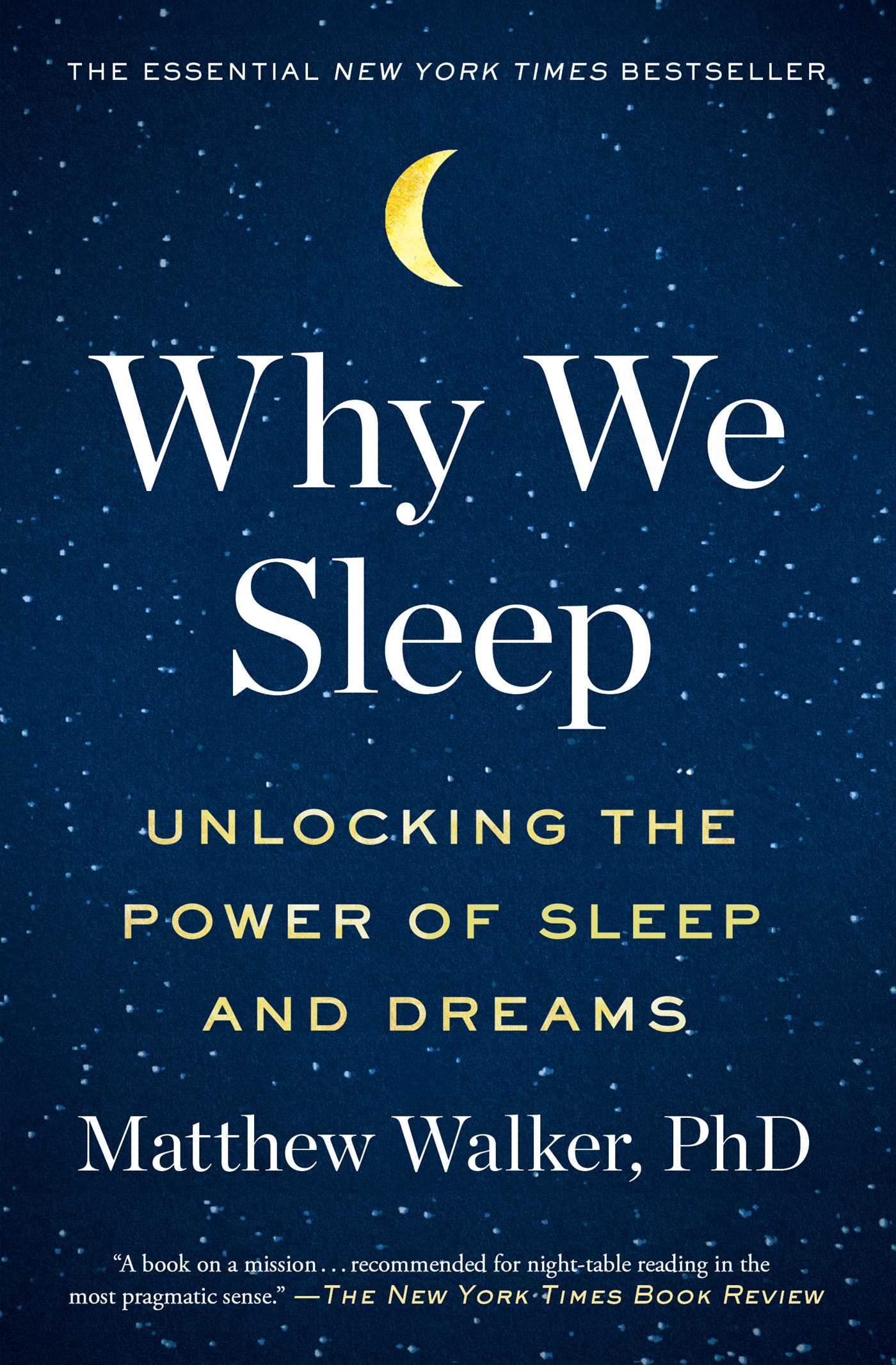
Why We Sleep by Matthew Walker is the kind of book that quietly dismantles a lot of assumptions you did not know you were carrying. It reads less like a self-help book and more like a slow-building case file: here is what your brain is actually doing at night, here is what happens when you cut it short, and here is why you probably do not feel the damage until it has already stacked up.
Two Forces Running the Show
Your sleep is not controlled by one thing. It is controlled by two, working in parallel.
The first is your circadian rhythm — a 24-hour internal clock sitting deep in the brain, in a structure called the suprachiasmatic nucleus. It broadcasts a signal of day and night to your brain and body using a hormone called melatonin. But melatonin does not knock you out. It is just the messenger. It sends the instruction: it is time. The actual sleep event is managed by other regions of the brain.
Walker also goes into chronotypes — why some people are genuinely wired for later sleep and earlier wake times are not natural for them. Night owls are not lazy. Their circadian clock runs differently. That section alone is worth the read.
The second force is adenosine. Every waking minute, adenosine builds up in your brain and creates what Walker calls sleep pressure. The longer you are awake, the more it accumulates. The harder it pushes.
Caffeine does not give you energy. It blocks adenosine receptors — it mutes the pressure signal. But the adenosine keeps building anyway. When the caffeine clears (and with a half-life of 7 to 8 hours, it takes much longer than most people realize), all that accumulated adenosine comes crashing back. That is the mid-afternoon wall. The crash was always coming. You just delayed it.
What Sleep Actually Does
NREM and REM: Different Jobs
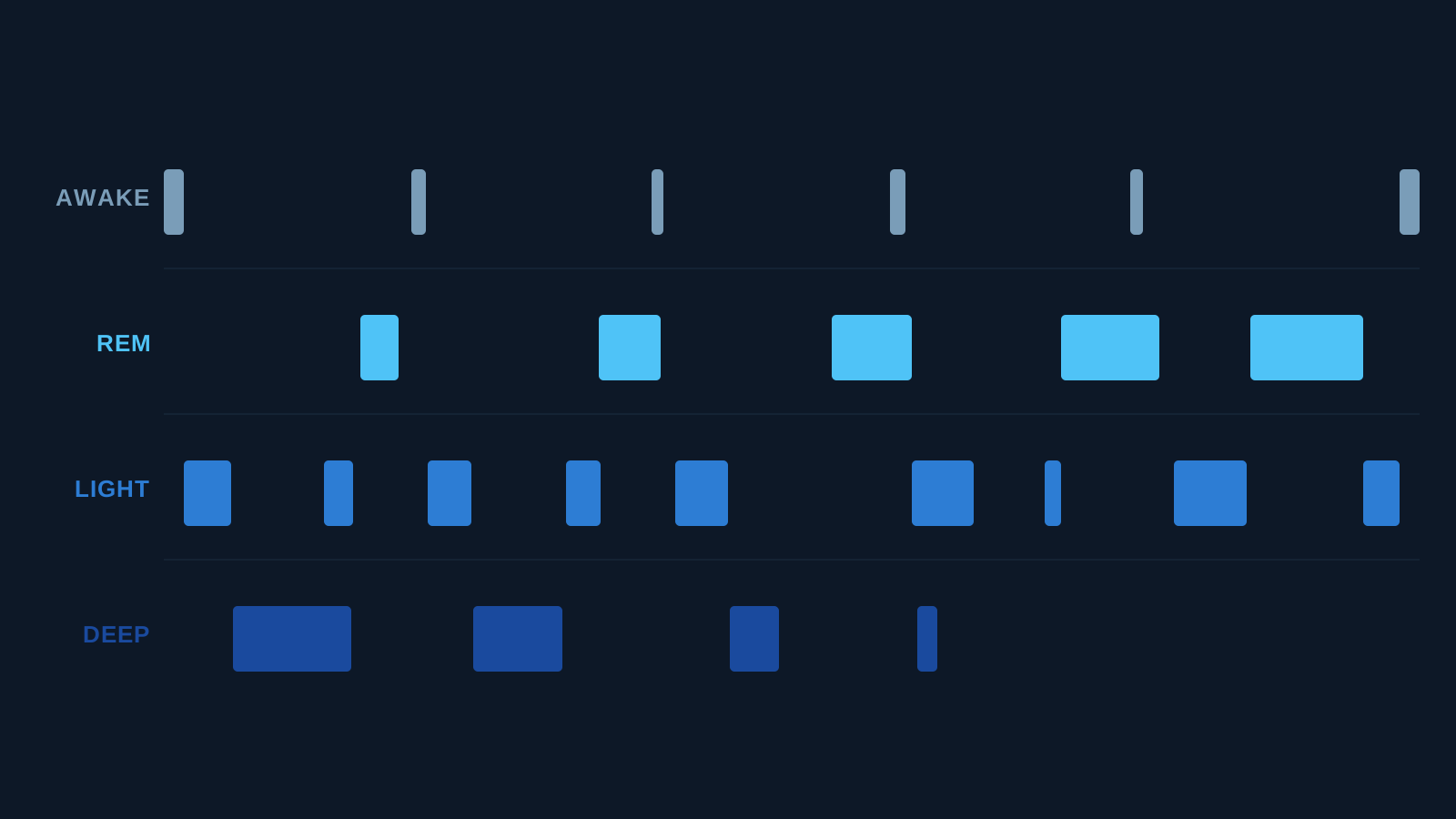
Not all sleep is the same. Your brain cycles through different states, and each has a distinct role.
Walker uses a clean frame for this:
- Waking is reception — you experience and learn
- NREM sleep is reflection — the brain stores and strengthens what you learned
- REM sleep is integration — the brain connects new memories with everything you already know
Newly learned facts sit first in the hippocampus — a kind of temporary warehouse with limited capacity. Deep NREM sleep transfers that information to long-term storage in the neocortex, freeing the hippocampus to absorb new things the next day. If you skip sleep, the warehouse stays full. The next day's learning has nowhere to go.
REM sleep does something different. It takes what has been stored and starts colliding it with the rest of your memory catalog — past experiences, existing knowledge, old associations. That collision is where creativity lives. The phrase "sleep on it" exists in almost every language, Walker notes, because the problem-solving benefit of REM sleep is universal.
Practice does not make perfect. Practice followed by a night of sleep makes perfect.
The Work That Happens While You Are Not Watching
Here is one that surprised me. The brain continues to improve skill memory during sleep, without any additional practice.
In research studies, people who learned a physical skill and then slept showed measurable improvement the next morning — beyond what the practice session alone explained. The brain was not resting. It was consolidating, reorganizing, and quietly finishing the work that waking hours started.
What Sleep Deprivation Actually Does
This is the section that sticks with you.
Walker is careful to cite specific research, and the numbers are not subtle:
- After 16 hours of being awake, the brain begins to fail
- After 10 days of just 7 hours of sleep, the brain is as impaired as it would be after 24 hours without sleep
- Three full nights of recovery sleep are not enough to restore full performance
- The sleep-deprived brain cannot accurately sense how impaired it actually is
And that weekend catch-up plan? Three full nights of recovery sleep are not enough to restore performance. The debt does not work the way most people think — you cannot simply sleep longer on Saturday and undo what the week took.
That last point is the quiet catch. The brain's ability to measure its own deterioration gets compromised by the same deprivation causing the deterioration. You feel fine. You are not fine.
Emotion and Impulse
Two brain regions become hyperactive when you are sleep-deprived: the amygdala — which drives strong emotions like anger and the fight-or-flight response — and the striatum — which governs impulsivity and reward-seeking.
Studies showed over 60% amplification in emotional reactivity in sleep-deprived participants. The prefrontal cortex, which normally maintains rational oversight over those reactions, becomes less connected to the amygdala when you are short on sleep.
You do not become a different person. You just become a louder, less filtered version of your worst reactions.
The Health Impact
Lack of sleep sets you on a path toward diabetes and leads you to obesity — this is now well understood and incontrovertible.
Walker does not frame this as a risk. He frames it as a consequence. Chronic sleep deprivation is now recognized as one of the major contributors to the escalation of type 2 diabetes. The connection is direct and well-documented.
Hunger and Weight
Inadequate sleep suppresses leptin — the hormone that signals fullness — and raises ghrelin — the hormone that drives hunger. You eat more, and you specifically crave higher-calorie food. It is not a willpower problem. The hormones are working against you.
It gets more specific when you are trying to lose weight. When sleep-deprived, the body becomes stingy about releasing fat. It burns muscle instead. That lean outcome from dieting while cutting sleep short? Less likely than most people think — and the research backs that up.
Immune System
In one study, participants were exposed to a cold virus under controlled conditions. Those sleeping 5 hours or less had a nearly 50% infection rate. Those sleeping 7 or more hours had an 18% rate. Same exposure. Very different outcome.
Sleep is not passive recovery. The immune system does active repair work at night, and cutting that short has measurable consequences that show up well before you feel sick.
REM Sleep and Dreaming
Humans spend 20 to 25 percent of their sleep in REM. Most other primates spend around 9 percent. Walker argues this is not incidental — the excess is tied to the complexity of human memory, social cognition, and creative capacity.
REM sleep activates the visual, motor, emotional, and autobiographical memory regions of the brain, while rational thinking centers go relatively quiet. Dreams are not random. They are the brain interrogating recent experience and positioning it against everything already stored — looking for unexpected connections, unresolved tensions, and new patterns.
Walker describes two things REM sleep accomplishes at once:
- Sleeping to remember — integrating meaningful experiences with existing knowledge and autobiographical memory
- Sleeping to forget — dissolving the sharp emotional charge that came wrapped around those memories
That is why a painful experience often feels less raw after sleep. The memory stays. The sting fades. REM sleep is, in Walker's framing, a kind of overnight emotional therapy.
Sleep Across Species
Some animals sleep with only one half of the brain at a time. Dolphins do it to keep swimming. Birds do it to maintain threat detection, and a flock will organize itself so the birds at each end of the row keep one eye open while everyone else sleeps fully. At some point the end birds rotate 180 degrees, sit back down, and let the other hemisphere rest.
Humans have a mild version of this. Sleep in an unfamiliar place — a hotel, a new apartment — and one hemisphere sleeps lighter than the other. Your brain has registered the unfamiliar environment as a potential risk and keeps a loose watch. It is one of the reasons the first night somewhere new is almost always worse sleep than the second.
What Actually Helps
Temperature matters more than most people know
To fall asleep, your core body temperature needs to drop by 2 to 3 degrees Fahrenheit. The ideal sleep temperature is around 65°F. A hot bath before bed actually helps — not because warmth feels relaxing, but because it draws blood to the surface of the skin. When you step out, that blood radiates heat outward and cools your core faster. Studies show it can produce 10 to 15 percent deeper NREM sleep in healthy adults.
Light is the most powerful lever on your clock
The receptors that signal daytime to your circadian clock are most sensitive to blue-spectrum light — the exact wavelength where modern LED screens are strongest. Evening screen use suppresses the natural rise in melatonin. In one study, two hours of iPad use before bed blocked melatonin levels by 23 percent.
Alcohol does not improve sleep
Alcohol sedates. People confuse that with rest. But what you get is not natural sleep — it is fragmented and stripped of REM. Alcohol is one of the most powerful suppressors of REM sleep we know of. The effects show up as grogginess, emotional blunting, and poor memory consolidation the next day.
Sleeping pills are not much better
Sleeping pills target the same brain region as alcohol. They produce sedation, not sleep. Walker is direct: the electrical activity during drug-induced sleep looks measurably different from naturally generated sleep, and the restorative benefits are not the same.
What actually works for chronic insomnia is CBT-I — cognitive behavioral therapy for insomnia. The basics: consistent sleep and wake times even on weekends, getting out of bed if you are lying awake for too long, removing clocks from view, reducing caffeine and alcohol, and keeping the room cool and dark.
One Thing That Stayed With Me
Walker has a way of describing things the brain does quietly at night that you only notice when they stop working.
Sleep is constantly modifying the information architecture of the brain at night.
I thought I understood sleep. I did not. Reading this is a little like finding the manual to something you have been using for decades and realizing there were settings you never knew existed.